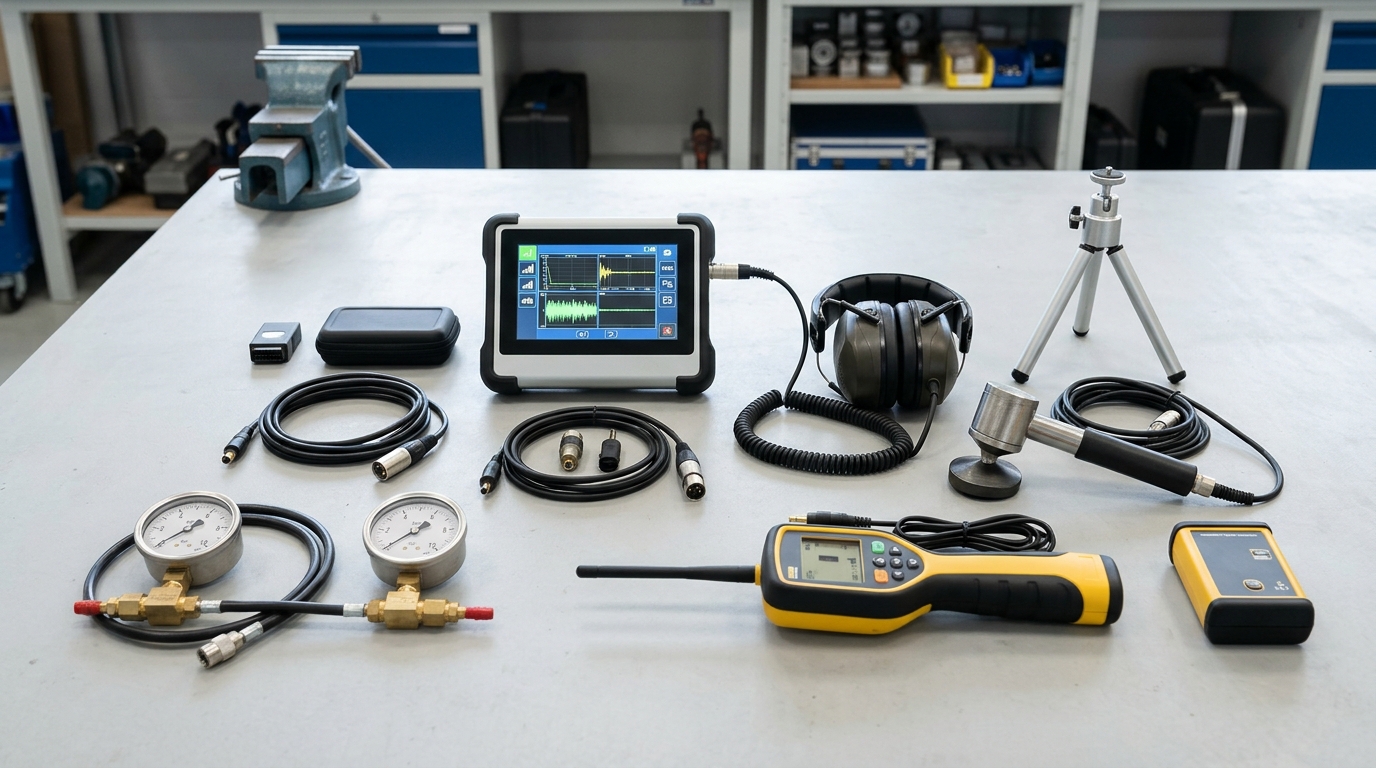
Precision Non-Invasive Subsurface Diagnostics
When you suspect an underground pipe failure, guess-and-check jackhammering is never the answer. Professional electronic leak detection Redlands homeowners trust relies on sophisticated non-destructive scientific instruments to locate pressurized water line breaks through multiple inches of reinforced concrete, tile, and flooring underlayment.
Whether you need comprehensive slab leak repair in Redlands or suspect a minor hairline crack, knowing the exact physical coordinates of the pipe failure protects your home's structural integrity. Modern leak under slab detection Redlands methodologies ensure that if concrete excavation is chosen, the opening is measured in inches rather than tearing open entire living room floors.
The Four-Stage Slab Leak Test Process
Finding a subterranean leak requires a systematic process that rules out normal plumbing variances and confirms pressurized pipeline compromise:
Municipal Water Meter Verification
The technician monitors your municipal water meter with all internal and external fixtures isolated. If the low-flow dial continues to spin or the digital meter records continuous gallon usage, an unmetered subterranean leak is active.
Hot vs. Cold Pressure Isolation
By attaching calibrated pressure gauges to water heater shutoffs and individual manifold manifolds, we isolate the domestic cold water grid from the hot water distribution loop. A rapid pressure loss on one system reveals which specific line is breached.
Acoustic Ground Resonance Listening
Pressurized water escaping an underground pipe fissure produces a characteristic sonic frequency. Using specialized ground microphones with ambient noise filters, technicians listen through concrete flooring to isolate the exact point of maximum water resonance.
Thermal Imaging and Electromagnetic Tracing
Infrared thermography maps temperature blooms across slab surfaces, pinpointing hot-water line breaches instantly. Simultaneously, electromagnetic line locators follow copper pipes through structural concrete to chart their exact path.
What Your Written Leak Report Includes
Following the completion of an electronic slab leak test Redlands homeowners receive a comprehensive written diagnostic report. This document is critical not only for designing an effective repair plan, such as a non-invasive slab leak reroute, but also for submitting claims to insurance carriers:
- Exact Coordinate Mapping: Clear marking of the leak location on floor plans and photographs of the physical floor position.
- Pipe Identification: Identification of the damaged line type (hot vs. cold supply), nominal pipe diameter, and estimated depth below grade.
- Pressure Differential Data: Documented starting and ending PSI readings proving pressure drop under closed isolation conditions.
- Thermal and Acoustic Readouts: Infrared imaging photographs capturing thermal blooms beneath concrete, tile, or laminate flooring.
- Engineered Repair Recommendation: An objective assessment regarding localized spot excavation versus an overhead bypass or full copper replacement.
Why Timely Leak Detection Protects Your Home
Underground water leaks in the Inland Empire do not resolve on their own. Continual pressurized water discharge beneath a home washes away fine sand aggregate and supportive clay soil. Over weeks or months, this subsurface cavity deprives the concrete slab of uniform weight support, resulting in severe structural stress, foundation tilting, or cracked drywall throughout the house.
If you have also experienced damp drywall or ceiling stains, explore our broader water leak detection services to ensure non-slab lines are sound. Discovering the exact point of failure immediately halts continuous structural erosion and saves thousands of dollars in secondary structural repairs.
Frequently Asked Questions About Slab Leak Testing
How accurate is electronic slab leak detection?
When performed by experienced diagnostic technicians using combined acoustic microphones, electromagnetic line tracers, and infrared cameras, electronic leak detection locates pipe failures within a 6-to-12-inch radius beneath reinforced concrete slabs.
Does leak testing damage my finished flooring?
No. Modern diagnostic testing is 100% non-invasive. The ground listening sensors sit on top of your tile, carpet, or hardwood, while thermal imaging scans surface radiation. No drilling or chipping occurs during the detection phase.