Understanding Foundation Leaks in San Bernardino County Homes
A water leak under slab Redlands property owners encounter develops when pressurized domestic plumbing lines running underneath a poured concrete slab foundation fail. In Redlands, California, residential neighborhoods feature an architectural mix of mid-century post-war tract homes constructed between the 1960s and 1980s, alongside contemporary master-planned subdivisions in newer residential pockets. The vast majority of these homes were built directly on grade with copper distribution lines embedded in sand beds or directly encased within concrete pours.
Over decades of service, underground pipes undergo severe physical and chemical stresses. Local water supplies across the East Valley carry elevated mineral hardness that reacts with internal copper walls, while native alluvial soils expand and contract during seasonal heat waves and rare heavy rains. The combination of chemical pitting, ground settlement, and low-level seismic vibrations from regional faults creates pinhole fissures. Left unattended, even a minor under slab leak repair Redlands scenario can escalate into significant foundation movement, eroded substructure soil, and extensive interior flooring damage.
Common Warning Signs of an Under-Slab Water Leak
Because subsurface supply lines are concealed under inches of structural concrete and sub-base aggregate, pressurized leaks rarely shoot water visibly into the air. Instead, homeowners must monitor subtle secondary indicators throughout the house:
- Warm floor sections: Unexplained warm patches on ceramic tile, hardwood, laminate, or carpet, frequently pointing toward a leaking hot water supply line.
- Audible running water: The sound of hissing, rushing, or dripping water behind baseboards or beneath floors while every plumbing fixture is completely turned off.
- Continuous water meter dial spinning: The low-flow indicator triangle or digital dial on your city water meter advances continuously while fixtures are isolated.
- Abnormally elevated utility statements: Sudden spikes in municipal water bills or natural gas heating costs without changes in household occupancy.
- Moisture accumulation and mildew: Damp carpet pads, dark discoloration along floor grout lines, swelling baseboards, or a musty odor near base cabinets.
- Foundation perimeter dampness: Puddles, mud pockets, or efflorescence crusting along exterior stem walls, especially near homes near South Redlands or Downtown Redlands.
What to Do Immediately When You Notice a Leak
If you suspect an active leak under foundation Redlands structures, taking timely protective measures will drastically limit property damage and structural settling:
- Locate and shut off the main water valve: Turn the primary residential gate or ball valve clockwise to halt incoming municipal water pressure. This stops pressurized erosion beneath your footings.
- Check your water heater: If you suspect a hot-water line failure, shut off the dedicated cold inlet valve above the water heater tank and switch the unit to vacation or pilot mode.
- Document visible evidence: Take date-stamped photos and video of damp baseboards, floor readings, meter positions, and utility bills for insurance purposes.
- Avoid haphazard demolition: Never permit contractors to jackhammer flooring on pure guesswork without comprehensive acoustic and electronic confirmation.
- Call for diagnostic testing: Contact a dedicated professional to coordinate non-destructive leak location and an engineered restoration plan.
Our Diagnostic and Repair Methodology
Resolving an underground failure requires a calibrated balance between electronic precision and structural engineering. Our systematic workflow ensures your home remains protected at every phase:
System Isolation & Pressure Testing
We calibrate digital pressure gauges directly to your supply lines, isolating cold and hot distribution loops to confirm whether pressure drops indicate an active subsurface failure.
Acoustic Listening & Thermal Imaging
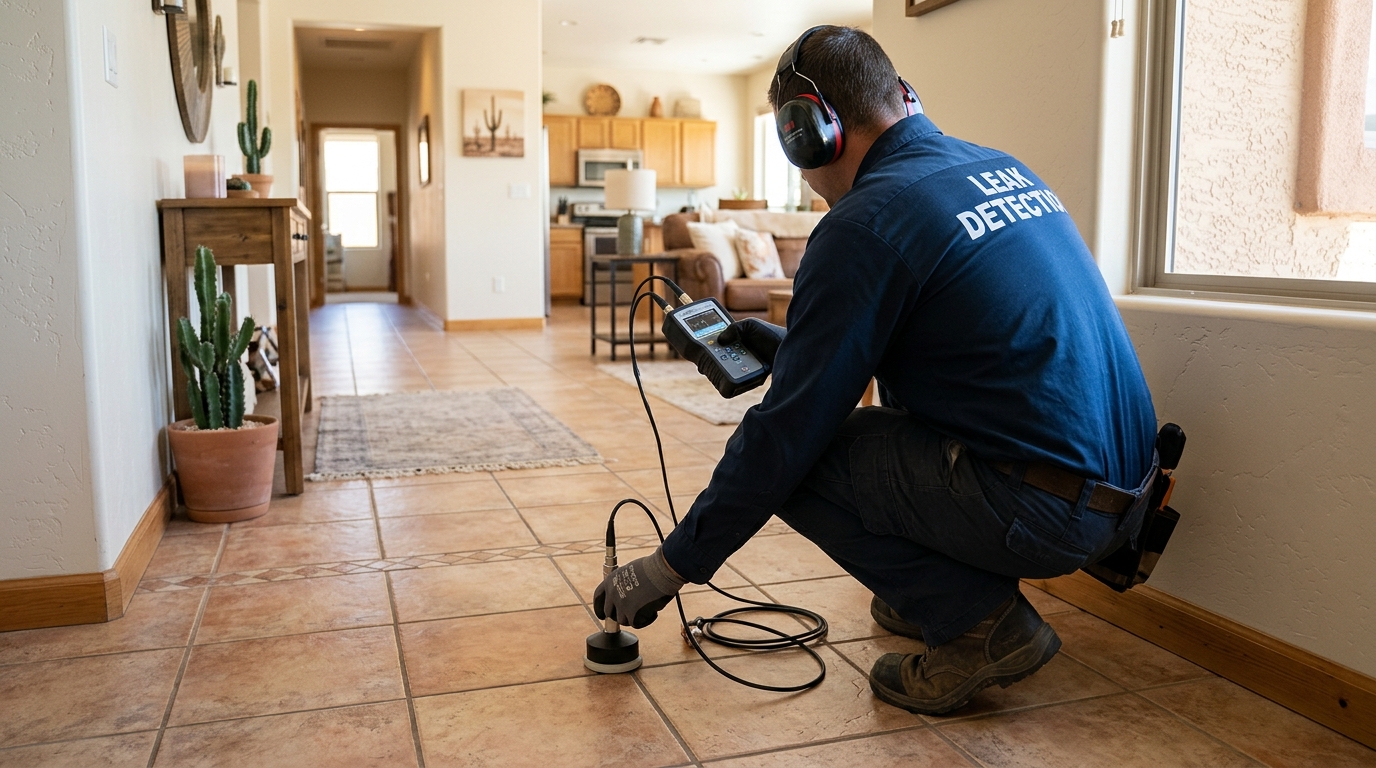
Using ground microphones, frequency filters, and high-resolution infrared thermal imaging, our technicians listen through slab concrete and track subsurface thermal signatures to locate the breach within inches.
Engineered Repair Selection
We analyze soil conditions, age of the piping, and accessibility to determine whether a precision localized spot repair, an overhead PEX bypass reroute, or a complete repipe is the safest solution.
Restoration & Written Documentation
Upon completing the repair, we pressure test the restored system, inspect surrounding framing, and furnish comprehensive documentation outlining leak location, root cause, and materials used.
Comparing Repair Options and Cost Considerations
When calculating slab leak repair cost Redlands homeowners must weigh immediate remediation expenses against long-term structural reliability. Three primary repair avenues exist:
Key Factors Influencing Project Scope
Every foundation leak possesses unique physical constraints. Overall costs are dictated by pipe accessibility, depth of the concrete pour, flooring materials (hardwood, Spanish tile, or carpet), line diameter, proximity to structural rebar, and whether municipal building permits are required by the City of Redlands.
1. Direct Foundation Spot Repair: When an isolated pipe fault occurs in an easily accessible area with otherwise pristine plumbing, technicians make a surgical concrete penetration to expose the damaged section, braze a new copper sleeve, wrap the line with protective shielding, and re-pour hydraulic concrete.
2. Overhead Pipe Rerouting: Frequently the superior approach for older copper networks, a reroute abandons the failing subterranean line entirely. A flexible PEX or insulated copper replacement is installed through interior stud bays and attic rafters, avoiding disruptive concrete demolition.
3. Comprehensive System Repiping: When an older residence suffers recurring failures across multiple rooms, isolated patches become financially counterproductive. Replacing the entire supply grid with modern materials eliminates subsurface vulnerability permanently.
Comprehensive Slab Leak Services in Redlands
We deliver specialized plumbing services tailored to preserve concrete foundations and eliminate hidden water leaks throughout San Bernardino County:
Slab Leak Detection
Non-invasive electronic testing, sonic ground detection, and thermal imaging that identify foundation leaks without damaging interior living spaces.
Explore Detection MethodsHot Water Slab Leaks
Specialized diagnosis for pressurized hot-water lines causing warm tile floors, rapid water heater cycling, and soaring natural gas charges.
Learn About Hot Line LeaksSlab Leak Rerouting
Bypassing corroded underground pipes by installing overhead PEX lines through attics and interior walls, preserving custom flooring.
View Rerouting SolutionsWhole-House Repiping
Full-scale water distribution replacement utilizing modern cross-linked polyethylene (PEX) or commercial copper for aging properties.
Discover Repiping BenefitsWater Leak Detection
Locating hidden pipe leaks within wall cavities, ceilings, irrigation mains, and incoming municipal service connections before rot sets in.
See General Leak DetectionPinhole Leak Repair
Targeted repair for microscopic copper pitting caused by hard water chemistry, aggressive soil reactions, and high fluid velocity.
Review Pinhole SolutionsInsurance Claim Support
Detailed technical reports, moisture readings, and photographic proof required by property insurance adjusters reviewing foundation claims.
Review Insurance GuidanceFrequently Asked Questions
What causes copper pipes under concrete slabs to fail in Redlands?
Slab leaks in Redlands are primarily driven by local water chemistry containing hard minerals that trigger internal electrolytic pitting, combined with native clay soils that expand and contract during seasonal weather shifts. Mechanical friction between unshielded copper tubes and coarse aggregate also wears down pipe walls over years of thermal expansion.
Is breaking through the concrete floor always necessary to fix a leak?
No. In fact, modern plumbing methodology favors non-invasive rerouting whenever feasible. By capping off the failed subterranean line and running a flexible replacement pipe through drywall cavities and ceiling framing, homeowners completely avoid jackhammering, concrete dust, and ruined tile or hardwood.
How quickly should I take action if I hear water hissing under my slab?
Immediate action is essential. Pressurized water continuously erodes the supportive subgrade soil underneath your foundation, potentially leading to foundation cracks, slab settlement, and compromised structural integrity. Shut off your main water valve and arrange an electronic inspection right away.