Why Hot Water Distribution Lines Fail First
Over 75% of foundation pipeline failures occur on the domestic hot water side. In Redlands residences, pressurized hot water lines run continuously below concrete slabs to deliver heated water from the garage or utility closet to bathrooms and kitchens. Because copper expands significantly when heated to 120-140 degrees Fahrenheit and contracts when cooling down, these lines undergo constant physical movement against surrounding sand, gravel, and unyielding concrete.
Combined with aggressive municipal mineral deposits and internal turbulence, this friction causes copper walls to thin and develop pinhole fractures. When you need expert slab leak repair in Redlands, addressing a hot-line failure promptly is paramount because the loss of heated water drastically inflates energy bills while weakening the sub-slab soil base.
Telltale Symptoms of a Hot Water Slab Failure
Hot water leaks present distinct physical symptoms that make early identification straightforward once you understand what to look for:
- Noticeable warm spot on floor Redlands: A localized patch of ceramic tile, laminate, or carpet that feels distinctly hot or warm to bare feet, often resembling underfloor radiant heating.
- Water heater running constantly Redlands: The gas burner fires nonstop or an electric element hums continuously around the clock because heated water is escaping beneath the foundation.
- Depleted hot water capacity: Showers turn lukewarm prematurely or water pressure on the hot side drops noticeably across multiple bathroom sinks.
- Spike in gas or electric utility bills: Heating hundreds of gallons of escaping water every day results in massive monthly utility bill increases.
- Cracking or loose floor tiles: Continued thermal expansion and subterranean moisture weaken mastic adhesive, loosening grout lines and popping ceramic tiles.
Advanced Thermal Imaging and Line Tracking
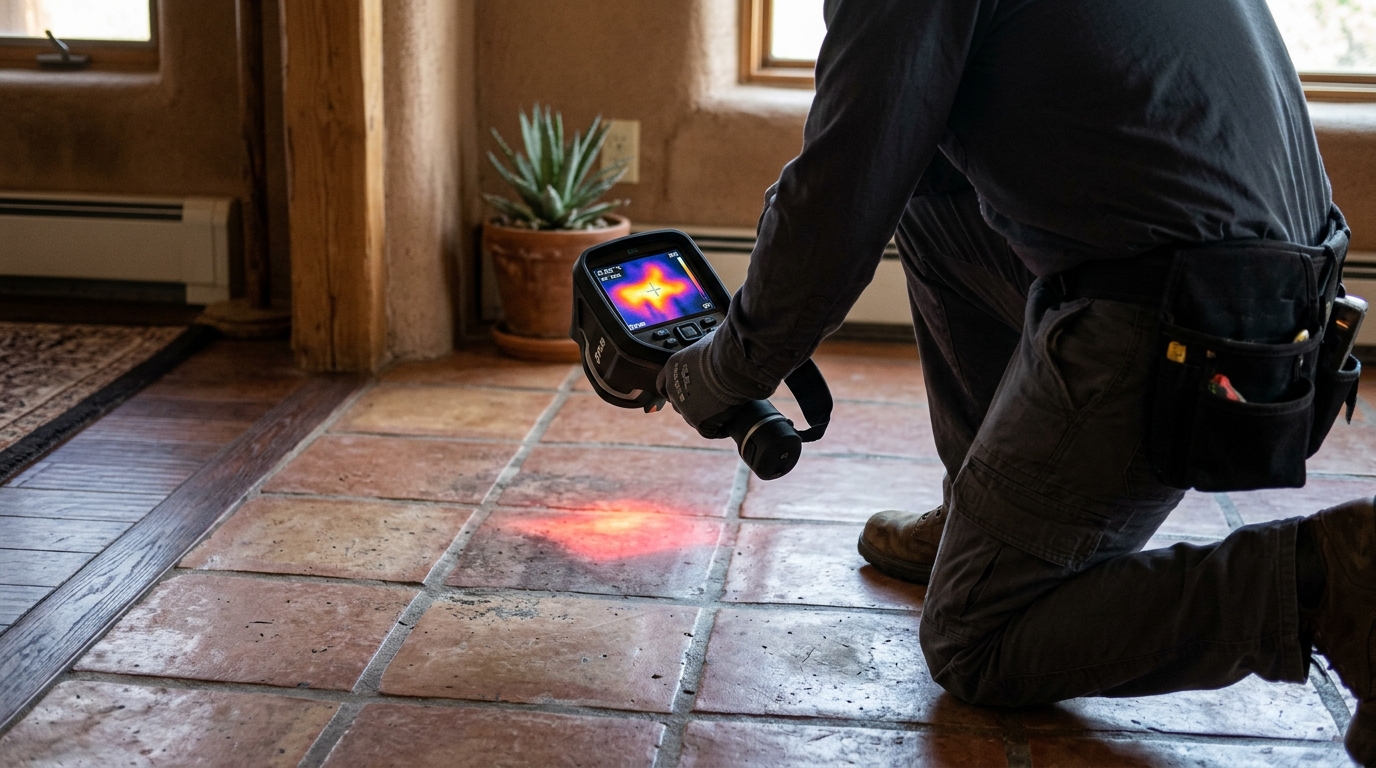
Locating a pressurized hot water breach does not require cutting open floors. We deploy calibrated infrared thermographic cameras that convert thermal radiation into visible color gradients. Technicians scan across finished flooring, observing heat blooms that spread outward from subterranean copper leaks.
By pairing thermal imagery with acoustic ground sensors from our slab leak detection procedures, we identify the exact breakthrough point without disturbing flooring or baseboards.
Repairing vs. Bypassing the Failing Hot Line
When dealing with hot-side failures, homeowners typically choose between two primary repair strategies:
Why Overhead Bypassing Is Recommended
Because hot water copper lines experience systemic thermal stress across their entire run, spot-repairing a single leak beneath the concrete often results in a secondary leak a few feet away within months. An overhead bypass eliminates underground hot-line vulnerabilities for good.
Overhead PEX Rerouting: Rather than tearing open expensive tile or engineered wood floors, the technician disconnects the failed underground hot supply line at both ends. A brand-new flexible PEX line is installed overhead through interior wall cavities and ceiling joists, as detailed on our slab leak reroute page. This non-invasive solution permanently removes the piping from corrosive soil and foundation friction.
Direct Foundation Spot Repair: If the copper line is located near the slab edge or in an accessible utility area with minimal flooring impact, a localized opening can be made in the slab to replace the damaged copper section with brazed silver-solder couplings and protective foam wrapping.
Frequently Asked Questions About Hot Water Slab Leaks
Can I temporarily turn off just the hot water to stop damage?
Yes. If you locate the cold water shutoff valve situated directly above your water heater tank, turning it clockwise halts incoming water into the heater, immediately relieving pressure on the subterranean hot water lines while preserving cold water service to your toilets and cold taps.
Does a hot water slab leak damage my water heater?
Continuous firing forces the water heater burner or heating elements to operate 24 hours a day without rest, dramatically accelerating internal tank scale accumulation, thermostat wear, and premature tank rupture.